

Intelligently connecting energy sourcesNX ThermoCond CO₂mpass
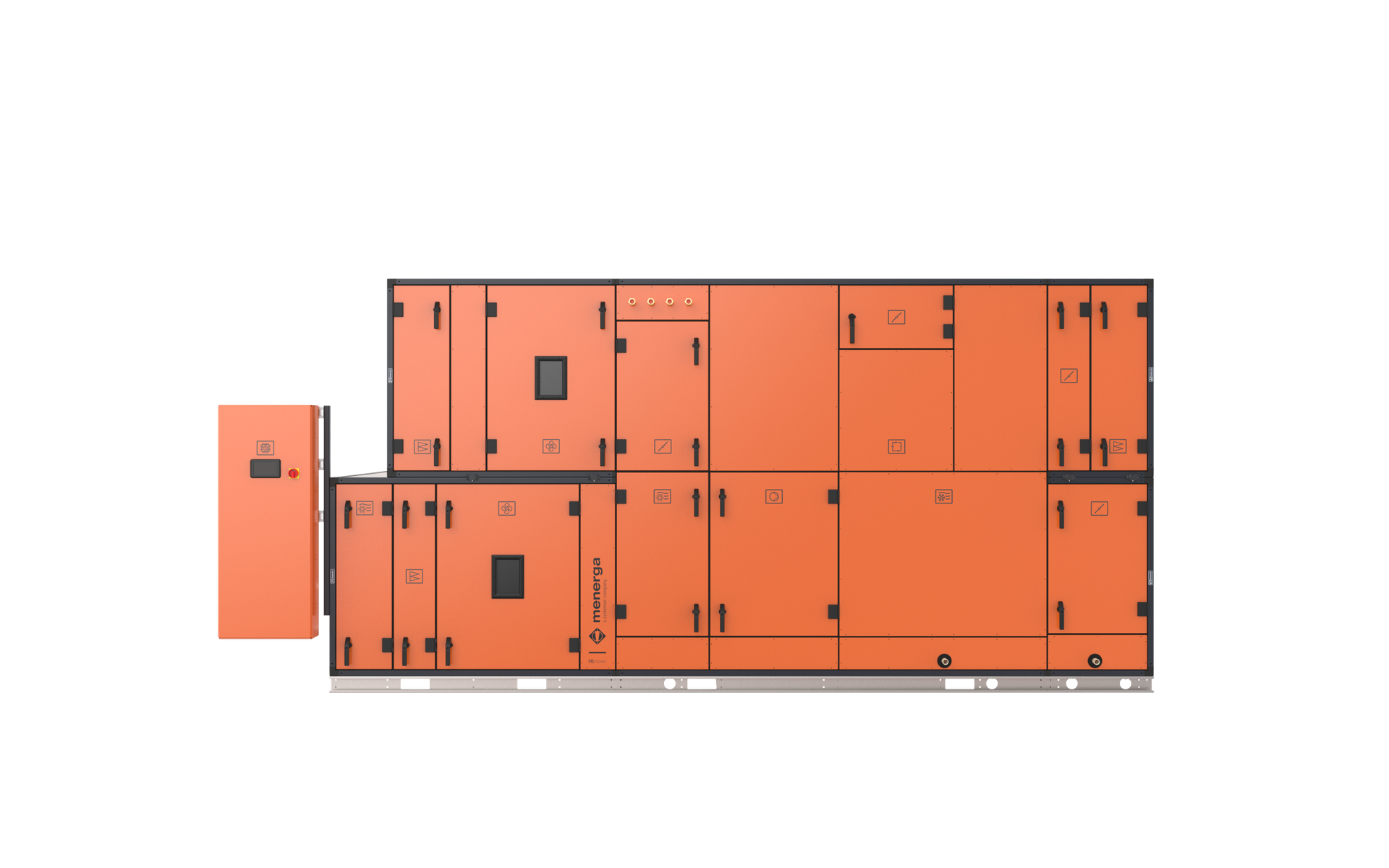
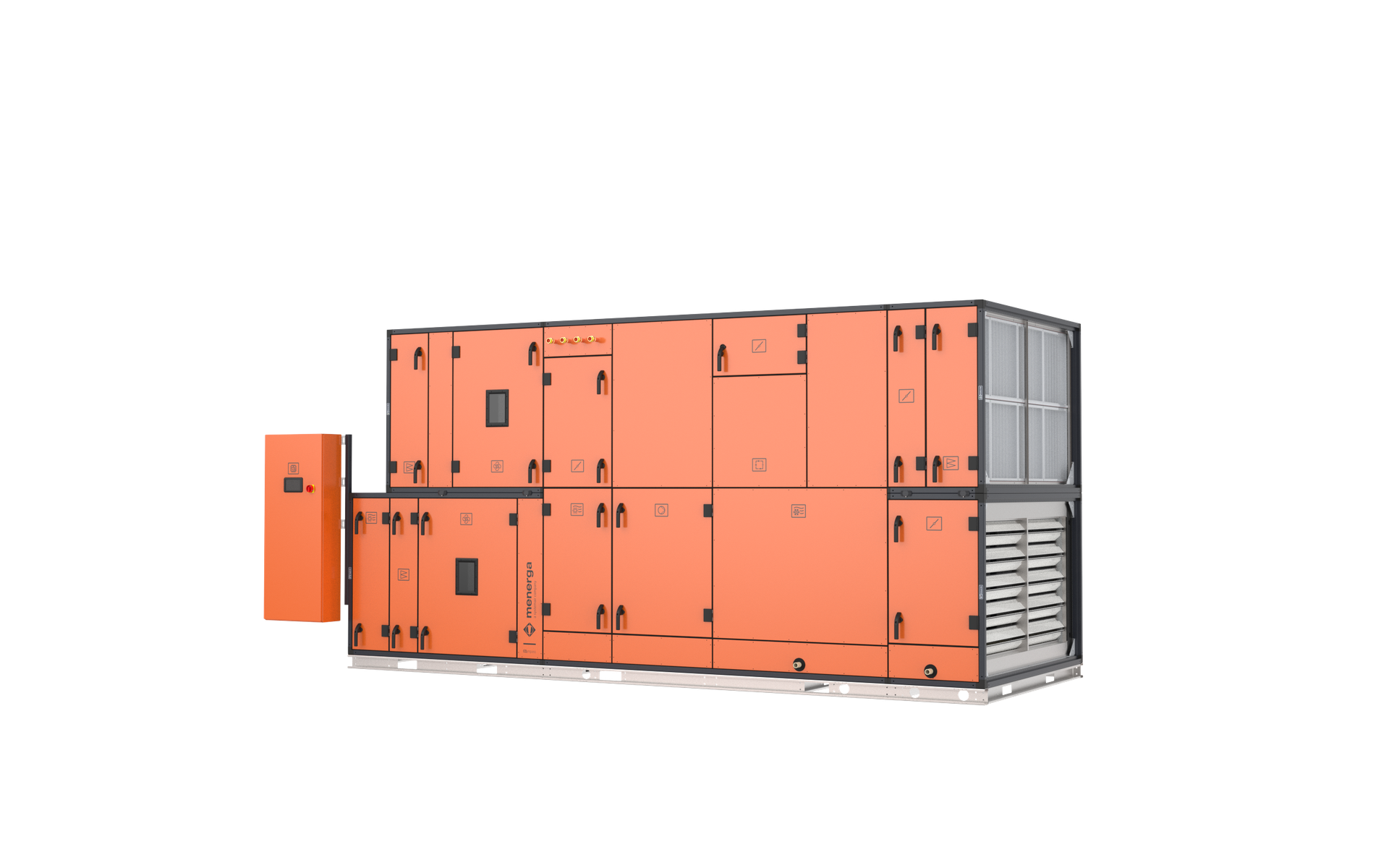
Our CO₂mpass unit rethinks energy efficiency in indoor swimming pools: rather than treating ventilation, water heating and building heating as separate systems, the system integrates the existing energy flows into a single, intelligent concept. Within the swimming pool climate control process, energy is used exactly where it is needed. The modular design enables project-specific heat utilisation, whilst CO₂ (R-744), as a natural refrigerant, ensures a future-proof solution.
Reusing energy
Heat recovered from the air-handling process is not wasted, but is utilised for supply air, pool water, domestic hot water or other heating circuits.
Ready for the F-Gas Regulation
R-744 is not a fluorinated greenhouse gas and is therefore not subject to the GWP-based phase-down restrictions set out in the F-Gas Regulation (EU) 2024/573.
Savings on operating costs
With a COP of up to 7 and intelligent heat utilisation, the energy used is utilised particularly efficiently.
The ideal swimming pool environment
Precise dehumidification and air treatment tailored to requirements ensure a comfortable indoor swimming pool environment whilst also protecting the building structure.
The future needs a different refrigerant
Plan for today. Make sound decisions for the long term.
Refrigerants are increasingly becoming a key factor in ensuring planning and investment certainty.
The requirements for building services engineering are changing. The F-Gas Regulation, climate impact and the debate surrounding PFAS are all gaining prominence. CO₂mpass therefore relies on CO₂ (R-744), a natural, PFAS-free refrigerant with a GWP of 1.
As R-744 is not a fluorinated greenhouse gas, it is not subject to the GWP-based phase-down restrictions of the European F-Gas Regulation. CO₂mpass thus establishes a long-term technological foundation for the design of modern indoor swimming pools.


An efficient roadmap for the future
Ready for the heating transition
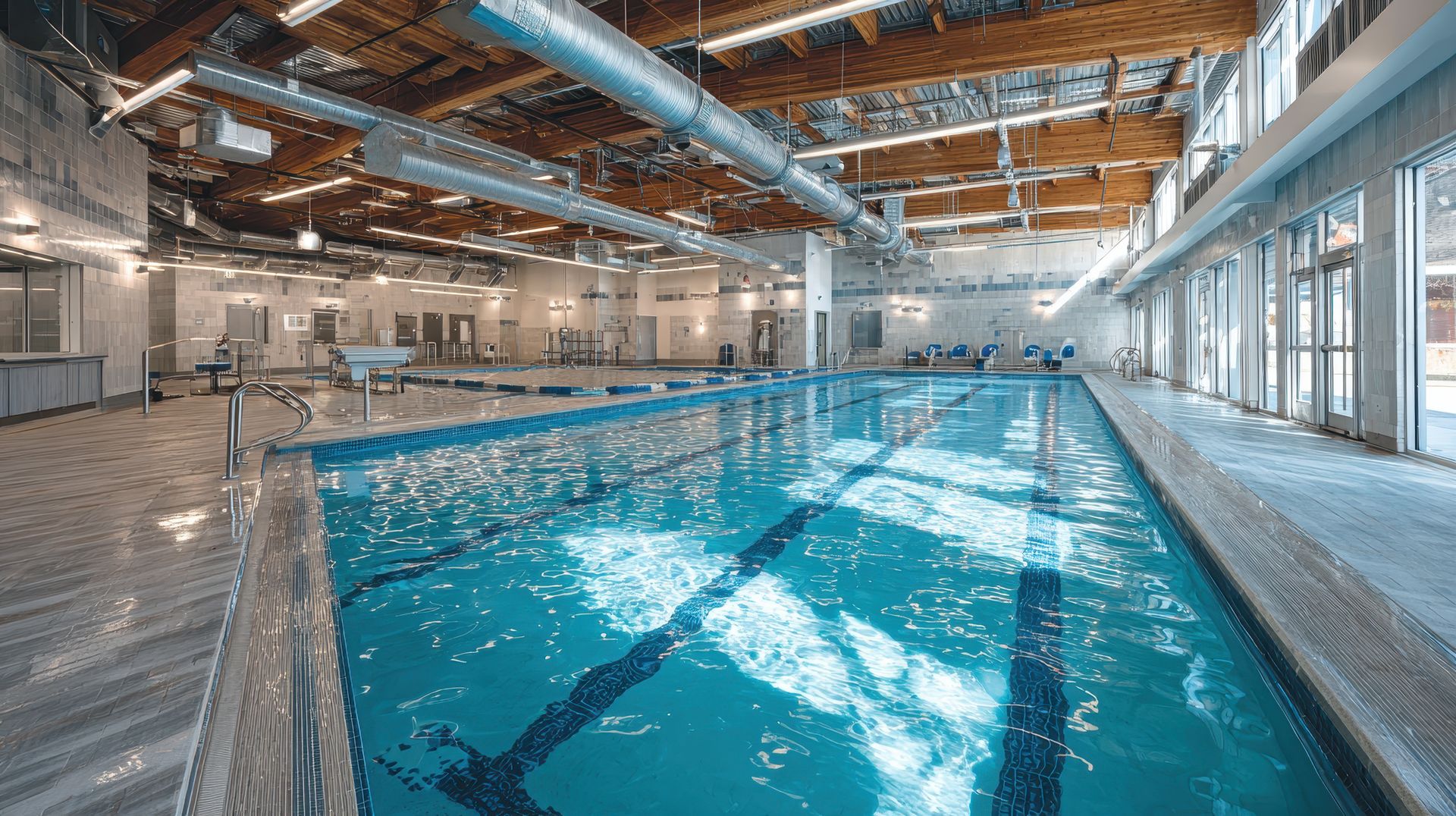
Swimming pools are among the most challenging buildings when it comes to the heat transition: high heating requirements, large volumes of air and year-round operation are compounded by increasing energy and climate protection requirements.
This is precisely where NX ThermoCond CO₂mpass comes in. The system combines ventilation, dehumidification and heat pump technology, and reuses existing energy exactly where it is needed within the building. As a fully electric solution, CO₂mpass helps operators reduce their reliance on fossil fuels and align their buildings with long-term decarbonisation targets.
In this way, a necessary technical investment becomes a strategic building block for maintaining value, achieving ESG targets and ensuring sustainable building operations.
Long-lasting precision
One system. Greater planning certainty.
NX ThermoCond CO₂mpass combines the key requirements of modern indoor swimming pools in a coordinated system solution.
NX ThermoCond CO₂mpass has been specially developed to meet the high demands of modern indoor swimming pools. The system solution combines dehumidification, heat recovery and heat supply in a coordinated overall concept, laying the foundations for safe, efficient and sustainable operation.
Safety & the Future
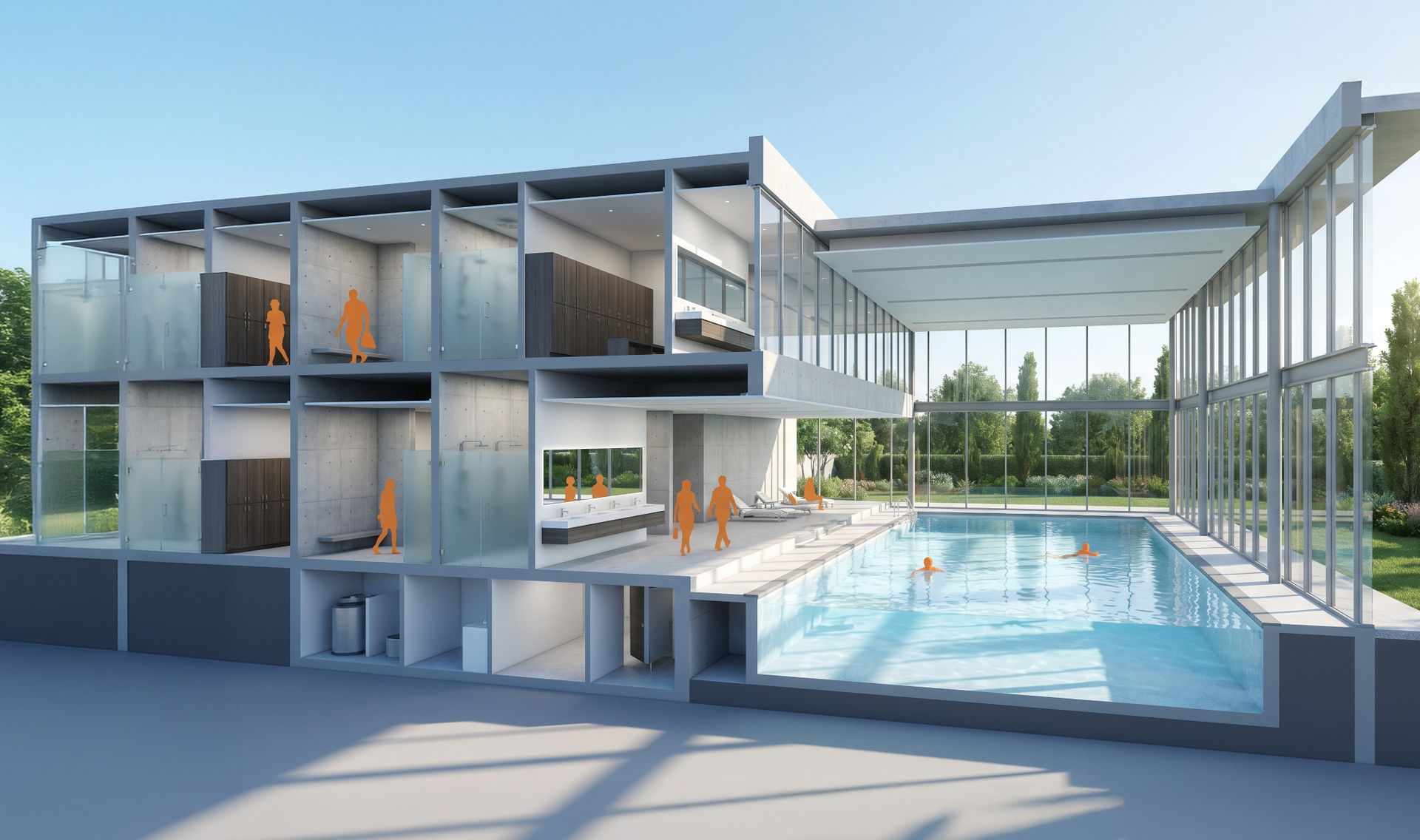
NX ThermoCond CO₂mpass meets current legal and technical requirements and supports sustainable building concepts. This future-proof CO₂ technology offers investment security for new-build and refurbishment projects.

Building physics requirements
CO₂mpass ensures controlled dehumidification and a stable indoor climate. Corrosion-resistant components and precise control technology protect the building structure and ensure a consistently high level of comfort in the swimming pool hall.
Long-term cost-effectiveness
Through intelligent heat recovery and the use of existing energy sources, CO₂mpass reduces energy consumption and optimises running costs. Robust components and a long service life ensure cost-effective operation for many years to come.

Recover heat. Connect. Use it effectively.
Thinking Ahead on Energy
Three steps transform existing heat into usable energy for the entire system.
Swimming pools have high heating requirements – yet their operations contain valuable energy that can be reused. CO₂mpass brings these two aspects together: rather than considering individual processes in isolation, the system links existing energy potentials and makes them available where they are needed.
STEP 1: RECOVER HEAT
STEP 2: CONNECTING ENERGY FLOWS
STEP 3: USING HEAT TARGETEDLY
Step 1
Recovering heatHarnessing energy from the air in swimming pools: During ventilation and dehumidification, heat is recovered from the humid air in the swimming pool. Instead of allowing this energy to be wasted as it is discharged with the exhaust air, it remains available within the system for further processes.
Step 2
Connecting energy flowsCO₂ as a link in the energy system: The integrated refrigeration cycle using CO₂ (R-744) absorbs heat and raises it to the required temperature level. This allows heat sources and heat sinks with different temperature requirements to be energetically coupled with one another.
Step 3
Using heat targetedlyOne energy source – various heat sinks: The recovered heat is used where it is needed: for supply air, pool water, domestic hot water, thermal pools or building heating. In this way, the available energy is utilised as efficiently as possible within the overall system.
CO₂mpass utilises unused energy and combines air treatment and heat supply in a highly efficient integrated system.
Swimming pool climate control and heat recovery cleverly combined
How does the NX ThermoCond CO₂mpass work?
Indoor swimming pools face two demanding energy requirements: due to constant water evaporation, the air inside the pool must be reliably dehumidified and temperature-controlled. At the same time, heat is required on a continuous basis – for supply air, pool water, hot water and other areas of the building.
The air-handling system combines demand-driven air treatment with a variable-output CO₂ heat pump using the natural refrigerant R-744. Only the amount of outside air actually required to dehumidify the air in the swimming pool hall is introduced.
The key advantage is that the heat available in the CO₂ cycle can be utilised exactly where it is needed in the swimming pool. This makes the ventilation system an important part of the overall energy strategy.
Even moisture becomes a source of energy
Recover more
The air in swimming pools contains enormous amounts of energy – not only because of its temperature, but also because of the high humidity.
It is precisely this additional potential that CO₂mpass utilises. The integrated heat pump cools the humid exhaust air below the dew point. This causes the water vapour to condense, and the latent heat released in the process can be made available to the energy system once again.
From efficient air handling to integrated energy systems
NX ThermoCond CO₂mpass for a range of energy concepts
Depending on the requirements and the energy concept, CO₂mpass is available in three progressive stages of expansion for indoor swimming pool climate control.
Efficient air treatment
Variant 1
The focus is on dehumidification, temperature control and hygienic air exchange. The heat from the CO₂ cycle is used to heat the supply air.
Additional low-temperature heat
Variant 2
In addition to air treatment, heat at 25–30 °C can be utilised for other applications – for example, for swimming pool water, or preheating fresh water.
Low- and high-temperature heat
Variant 3
This design makes particularly comprehensive use of the thermodynamic potential of the transcritical CO₂ process. In addition, high-temperature heat of 60–70 °C is available for applications such as domestic hot water, showers, sanitary facilities, thermal pools or other heating circuits.
| Function | Variant 1 | Variant 2 | Variant 3 |
|---|---|---|---|
| Air treatment and dehumidification | ✓ | ✓ | ✓ |
| Supply air heating | ✓ | ✓ | ✓ |
| Low-temperature water heating | – | ✓ | ✓ |
| Low-temperature level | – | 25–30 °C | 25–30 °C |
| High-temperature water heating | – | – | ✓ |
| High-temperature level | – | – | 60–70 °C |
| Domestic hot water | – | Preheating | ✓ |
| Pool water heating | – | ✓ | ✓ |
| Support for building heating | – | – | ✓ |
Making smart use of your swimming pool’s energy potential
More than just an air-handling unit
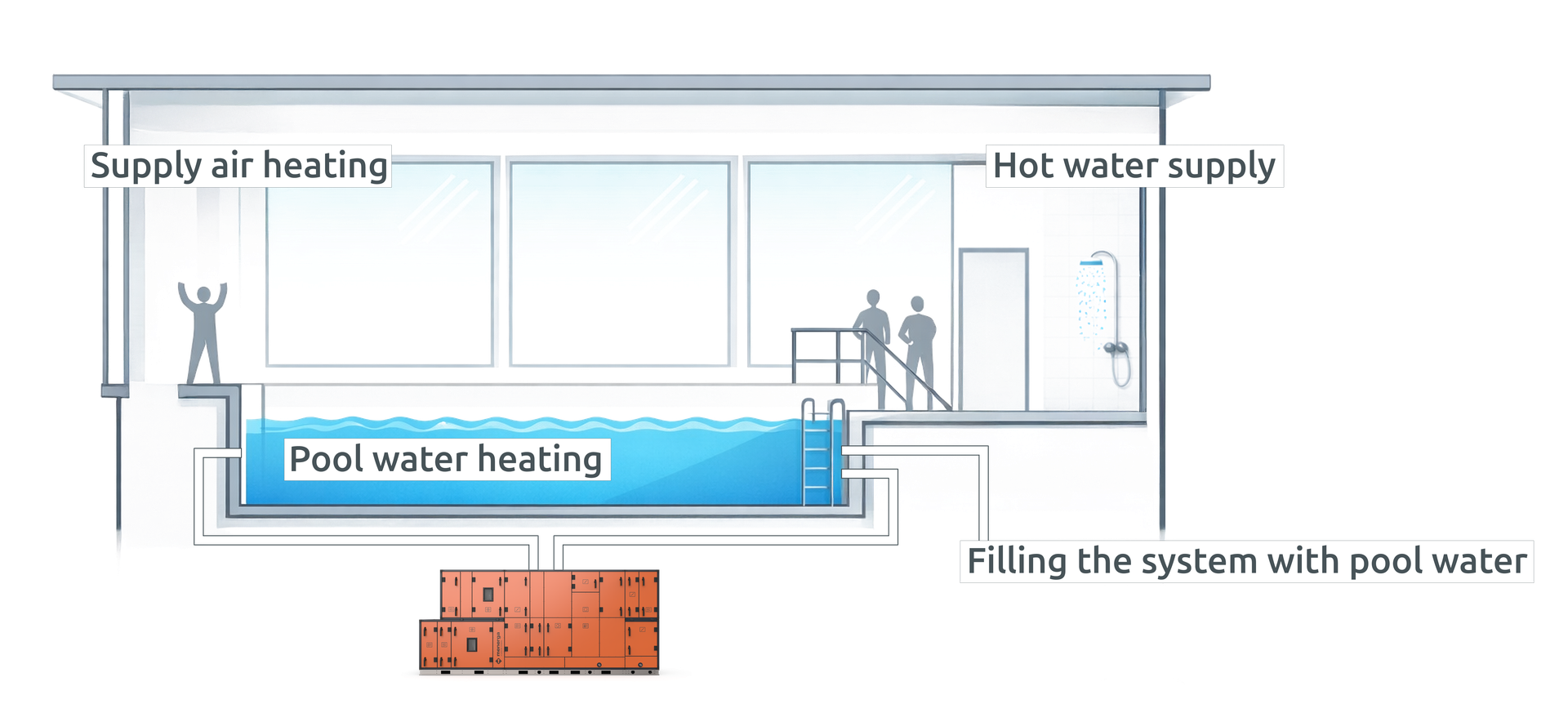
CO₂mpass harnesses the heat available within the system for other applications in the swimming pool and the building. Depending on the configuration level, different temperature levels are available for various consumers.
Using heat where it is needed
Existing heat. Put to good use in many ways.
Preheating of domestic hot water
Water preheating for pool filling, shower water, etc
Domestic hot water
Up to 60–70 °C for showers and sanitary facilities
Pool water
Temperature control for swimming pools, thermal pools and hot tubs
Building heating
Support for additional heating and zone circuits
The technology behind NX ThermoCond CO₂mpass
CO₂mpass for sustainable indoor swimming pool climate control
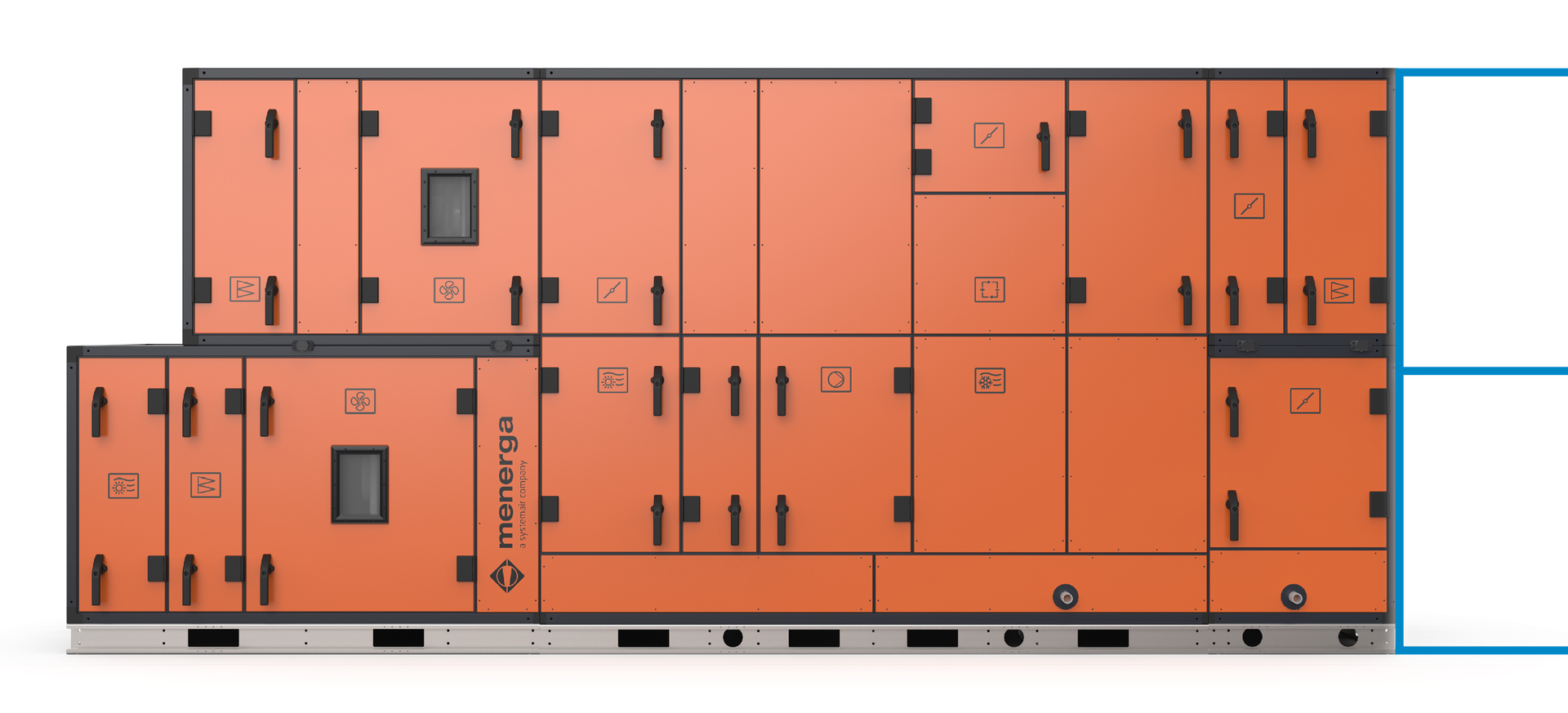
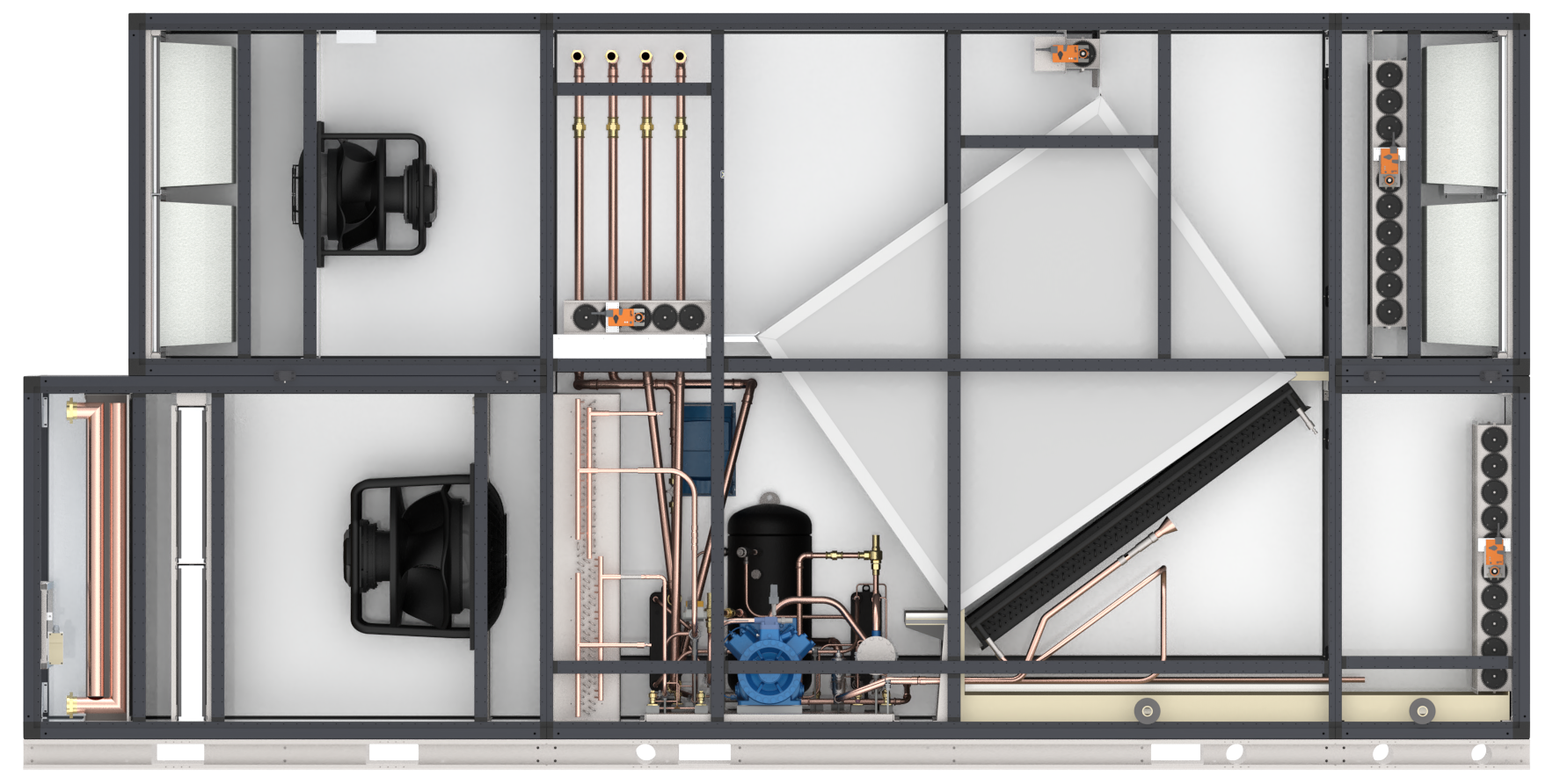
CO₂mpass combines ventilation, dehumidification, heat recovery and CO₂ heat pump technology into a single, integrated system. Discover the key components and their functions directly within the unit.
Natural refrigerant technology
CO₂ (R-744) enables future-proof, PFAS-free and particularly sustainable indoor swimming pool air conditioning.
Integrated heat pump
Efficient heat pump technology makes targeted use of available energy to heat the indoor swimming pool and the pool water.
Highly efficient EC fans
Demand-controlled air flow reduces energy consumption and ensures efficient system operation.
Corrosion-free PP heat exchanger
The polypropylene heat exchanger is particularly resistant to the harsh environment found in swimming pools and is built to last.
Intelligent control technology
The integrated control system optimally adjusts ventilation, dehumidification and heat recovery to current requirements.
Filter section
Reliably filters the air whilst protecting downstream components of the system.
Highly efficient heat recovery
Energy from the exhaust air is recovered and reused for the indoor swimming pool’s air conditioning system.
Thermal separation TB1
Minimises thermal bridges within the casing and reduces unwanted heat loss.
An overview of the casing specifications
| Criterion | Meaning | Value |
|---|---|---|
| Mechanical strength | Indicates the structural strength and rigidity of the unit casing under operating conditions | D1 (M) |
| Casing leakage | Indicates the airtightness of the casing and the amount of uncontrolled air leakage | L1 (M) |
| Heat transfer | Indicates the level of thermal insulation of the casing and the resulting heat losses | T2 |
| Thermal bridge factor | Indicates how effectively thermal bridging and surface condensation are prevented | TB1 |
Efficiency starts with the details – and every component counts.
Not reimagined. Just taken further.
Innovation based on experience
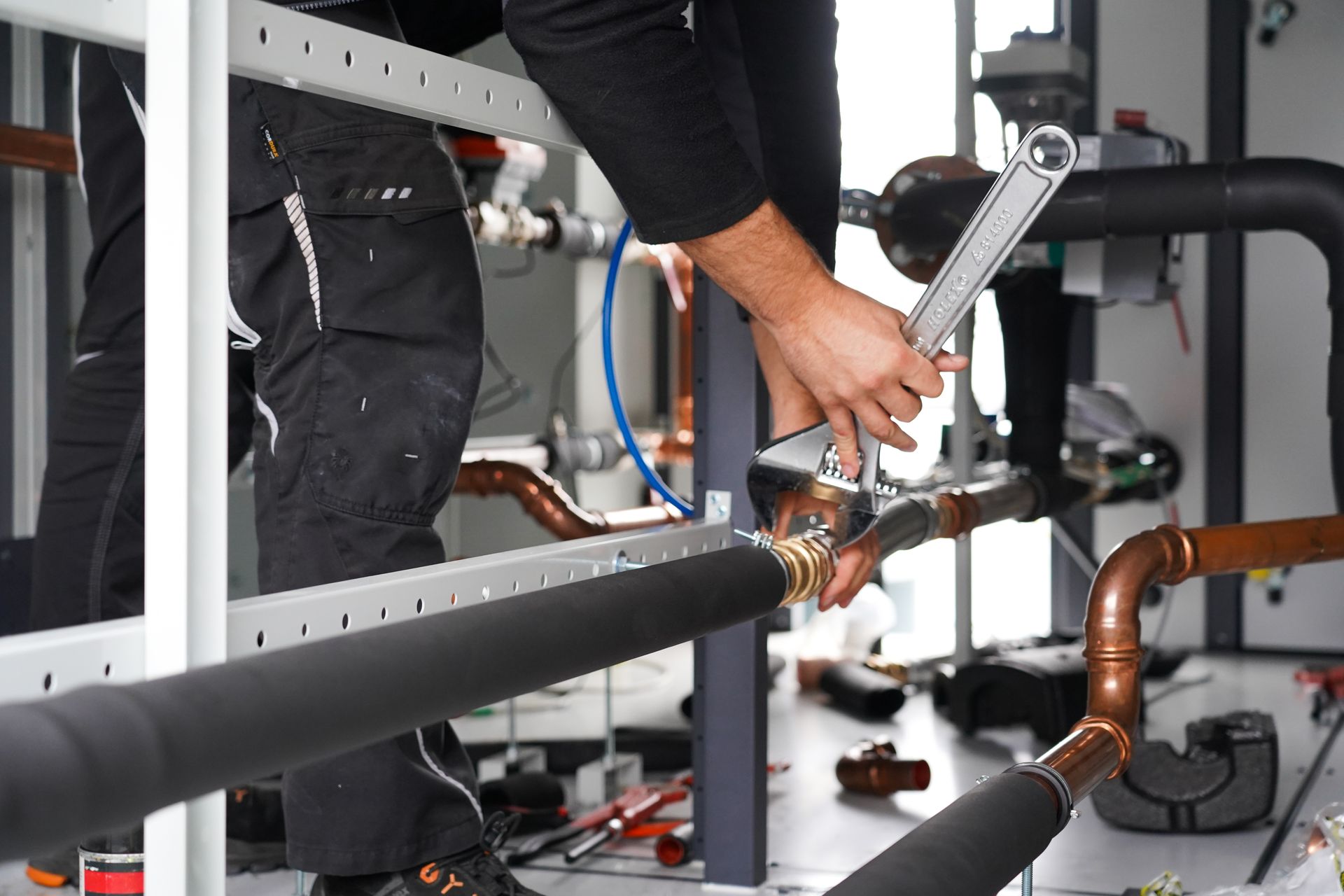
CO₂mpass is a technology with a long history. Since as far back as 1980, Menerga has been combining ventilation and heat pump technology to recover energy from exhaust air and reuse it within the system.
This experience forms the basis of the NX ThermoCond CO₂mpass. Proven Menerga technology and the established NX platform have been combined with a targeted development phase to meet the specific requirements of CO₂ as a refrigerant.
The result: a new generation of swimming pool air conditioning, developed on the basis of decades of experience.
Let’s work together to find the right CO₂mpass solution
Planning & Project Consultancy

The right solution for your swimming pool
Personal project consultancy
Every swimming pool has different requirements in terms of air flow rates, dehumidification capacity and heat utilisation. Our experts will assist you in designing the appropriate CO₂mpass configuration and integrating it into your bespoke energy concept.